
How can homes be future-proofed for accessibility, mobility, and independence in 2026?
TL;DR: Thai homes can be future-proofed in 2026 by removing mobility barriers early, especially stairs.
Installing a screw-driven home lift is one of the most practical solutions to support aging in place, multigenerational living, and long-term independence.
Unlike hydraulic, traction, or vacuum systems, screw-driven home lifts require no machine room or deep pit, offer better usable space, and fit more easily into existing Thai homes.
Brands like Cibes Lift, Kalea Lift, Antera Lift, and Ascenda Lift focus on this technology, making it suitable for both current comfort and future needs.
As Thailand’s aging population grows, accessible home design is no longer optional. It’s a smart, long-term choice that improves safety, independence, and property value.
What is Future-Proofing a home?
Future-proofing a home means making sure it works not only today, but 10, 20, or 30 years from now. As families age, needs change. Stairs that once felt easy can slowly become barriers.
In 2026, accessibility is no longer a special feature. It’s a core part of smart home design. Homes that adapt over time allow people to stay independent, safe, and comfortable without moving out or rebuilding later.
Home lifts are becoming one of the most practical answers to this challenge.
Why is accessibility becoming a priority for modern homes?
People live longer. That’s the simple reason.
Globally, tens of millions of people already use wheelchairs, walkers, or mobility aids. Many more deal with joint pain, balance issues, or reduced strength. Thailand is no exception. The country is entering a fast-growing aging phase.
Designing homes only for the young no longer makes sense. A well-designed home should support children, adults, and seniors alike. Accessibility helps everyone, even before mobility becomes a real issue.
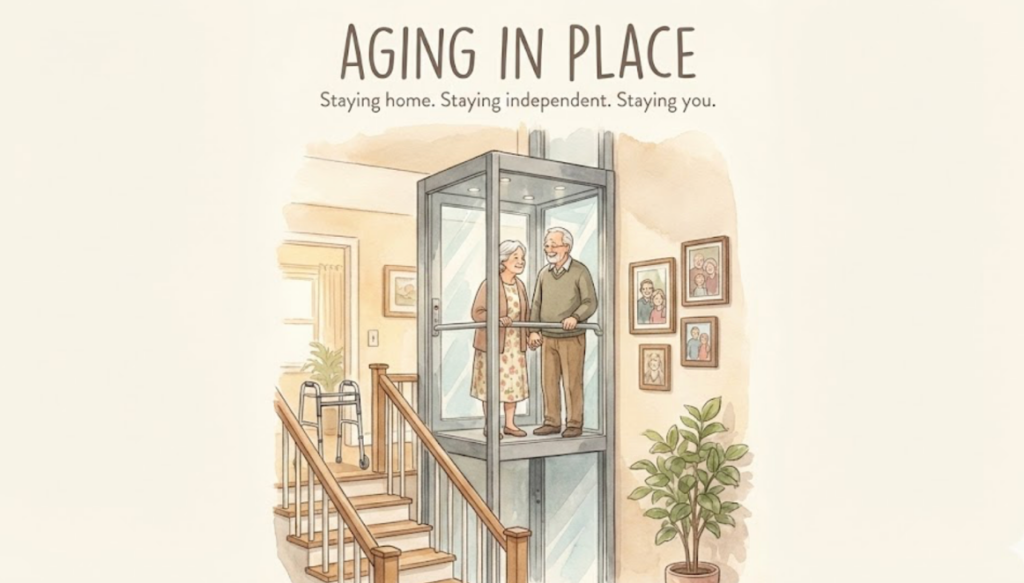
What does “aging in place” actually mean?
Aging in place means staying in your own home as you grow older, instead of moving to assisted living or relying heavily on others.
For this to work, the home must remove physical barriers. Stairs are usually the biggest one. A residential lift allows daily life to continue normally, without stress or risk.
With the right lift, people keep control of their routine, privacy, and dignity. That matters more than most people realize.
Why are multigenerational homes becoming more common?
More families now live with parents, children, and grandparents under one roof. Rising property prices and longer lifespans play a role.
A shared home needs shared access. A solution that works only for one person isn’t enough. This is where residential lifts outperform stair lifts. Everyone can use them, regardless of age or ability.
A home lift supports the whole family, not just one user.
Why is screw-driven technology the best choice for home lifts?
Screw-driven lifts are purpose-built for homes. This is where the Cibes Lift Group from Sweden leads globally with Cibes Lift, Kalea Lift, Antera Lift and Ascenda Lift.
Unlike hydraulic or traction systems, screw-driven lifts do not need a machine room, deep pit, or overhead shaft. Everything is compact and self-contained.
This makes them safer, easier to install, and far more flexible for residential spaces. For homes, simplicity is a strength.
How does Cibes Lift Group differ from older home lift brands?
Many traditional brands rely on designs that have barely changed in years. Some systems are adapted from commercial elevators, not designed specifically for homes.
Cibes Lift Group focuses only on low-speed, screw-driven home lifts. The technology has been refined continuously, with frequent updates in safety, control systems, and design.
While some competitors age quietly, Cibes, Kalea, Antera, and Ascenda continue to evolve. That’s one reason trust keeps growing worldwide.
Why is standing space more important than footprint?
Footprint shows how much floor space a lift occupies. Standing space shows how usable the inside really is.
Vacuum lifts may look compact, but their circular shape limits usable space. Wheelchairs often feel tight inside. Hydraulic lifts need thicker walls and extra equipment, which eats space quickly.
Screw-driven lifts from Cibes, Kalea, Antera, and Ascenda offer better standing space within a clean, square footprint. You get comfort without wasting valuable floor area.
How do screw-driven lifts compare to other technologies?
Here’s a simple comparison focused on real home use.
| Technology | Pros | Cons |
| Screw-driven like Cibes, Kalea, Antera, and Ascenda | Compact, no machine room, stable, low maintenance | Lower speed by design |
| Hydraulic | Smooth ride | Needs pit, machine room, oil system |
| Traction | High performance | Large shaft, counterweights, space heavy |
| Vacuum | Eye-catching | Limited space, noise, design constraints |
Traction lifts are excellent for tall buildings. In homes, they often take too much space. Screw-driven lifts fit the residential reality better.
Why is installation speed important for families?
Speed matters, especially when mobility is already limited.
Cibes Lift Group home lifts (Cibes, Kalea, Antera, and Ascenda ) are often installed in just a few days. There’s no heavy construction, no deep pit digging, and minimal disruption to daily life.
For someone struggling with stairs, those days can change everything. Independence returns fast, not months later.
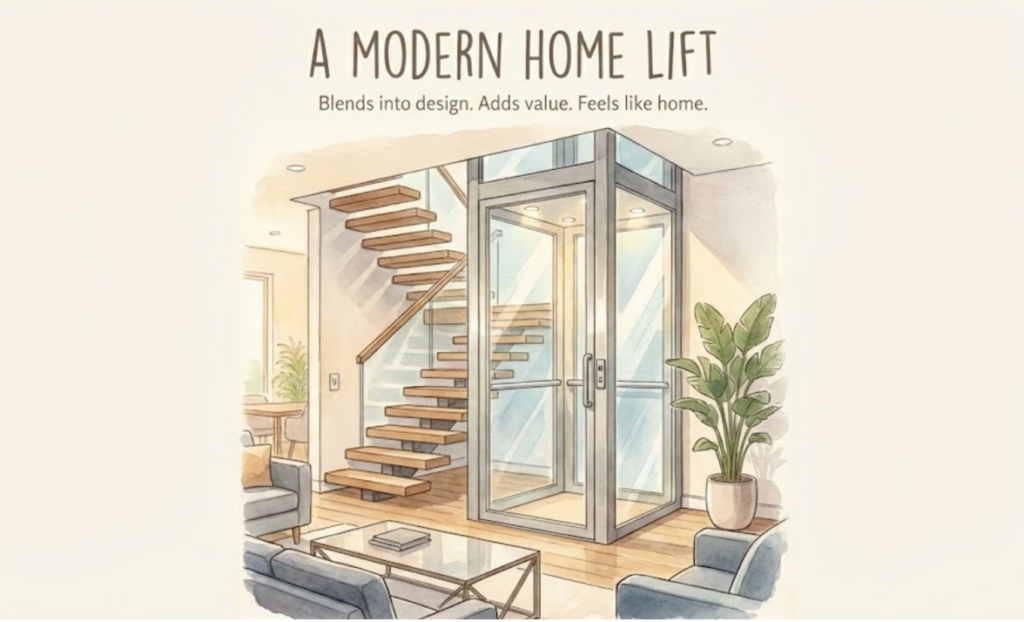
Can a home lift really blend into modern design?
Yes, when it’s designed for homes from the start.
Cibes, Kalea, Antera, and Ascenda lifts follow clean Scandinavian design principles. Glass, soft lighting, and slim structures help the lift feel like part of the home, not a medical device.
The lift adds value visually, not just functionally. That’s a key difference from bulky stair lifts or exposed machinery.
How flexible are Cibes, Kalea, Antera, and Ascenda models for different needs?
Flexibility is one of their strongest points.
There are models for tight spaces, two-floor homes, villas, and larger houses. Some suit wheelchairs. Others are ideal for daily convenience like carrying groceries or laundry.
Door types, entry points, and cabin sizes can be adjusted to match real home layouts. It’s not one solution forced into every house.
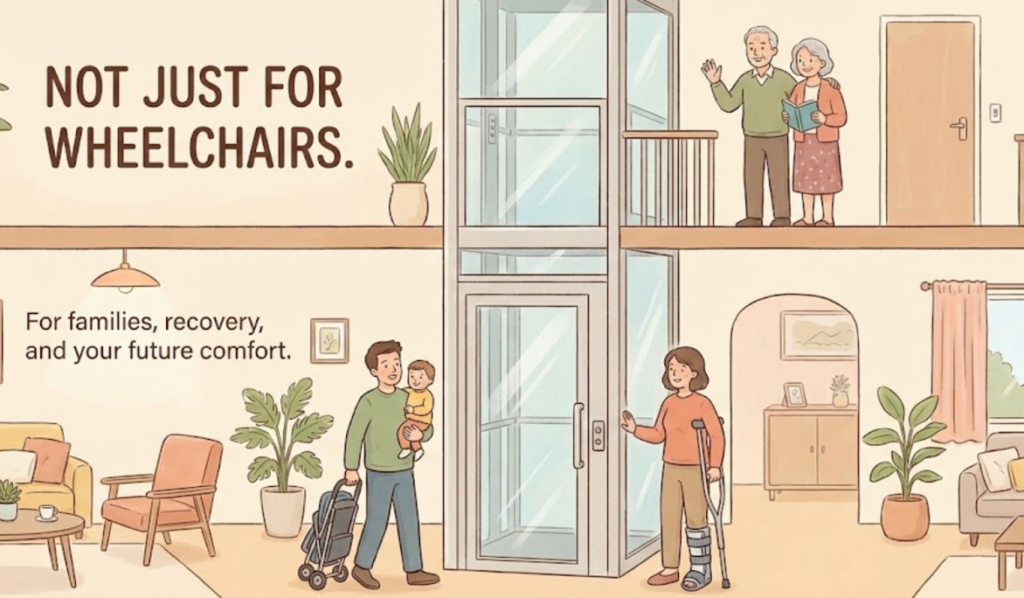
Are home lifts only for wheelchair users?
No, and that’s a common misunderstanding.
Many users install a lift before they truly need it. Parents with young children, people recovering from surgery, or homeowners planning ahead all benefit.
A lift supports comfort today and security tomorrow. That’s what future-proofing means.
How energy-efficient and sustainable are screw-driven home lifts?
Screw-driven lifts consume very little power. They run on standard household electricity and only use energy when moving.
Materials are built for long life, with recyclable components. Many models can even be dismantled and reinstalled in a new home.
This makes them a practical and responsible long-term choice.
How do home lifts compare to stair lifts in the long run?
Stair lifts usually support one person. They block staircases and don’t age well visually.
A residential lift supports everyone. It improves resale value, usability, and safety across generations.
Over time, many homeowners find that a home lift delivers better value, not just better comfort.
Why are more people in Thailand choosing Cibes or Kalea in 2026?
Thailand’s aging population is growing fast. Families are planning earlier and smarter.
Cibes, Kalea and other Cibes Lift Group brands have become a trusted name because it combines proven technology, local support, and a wide product range. There’s a solution for many budgets, starting from around 599,000 THB and going up based on size and design.
The group operates directly through its Thailand headquarters, not through distant distributors. That builds confidence.
What brands are part of the Cibes Lift Group home lift range?
Each brand serves a clear role.
Cibes focuses on premium, highly flexible home lifts.
Kalea brings refined design and smart sizing.
Antera offers practical, luxury-driven solutions.
Ascenda is ideal for simple two-floor access.
Together, they cover most residential needs without forcing compromises.
Is a home lift still a smart investment for the future?
Yes, because needs always change.
A home that adapts keeps its value. It supports independence, reduces accident risk, and avoids costly renovations later.
In 2026, future-proof homes are no longer a luxury idea. They’re a sensible response to real life. And screw-driven home lifts are one of the most reliable ways to get there.